

Petals in the Night Air
The Quiet Magic of Yozakura
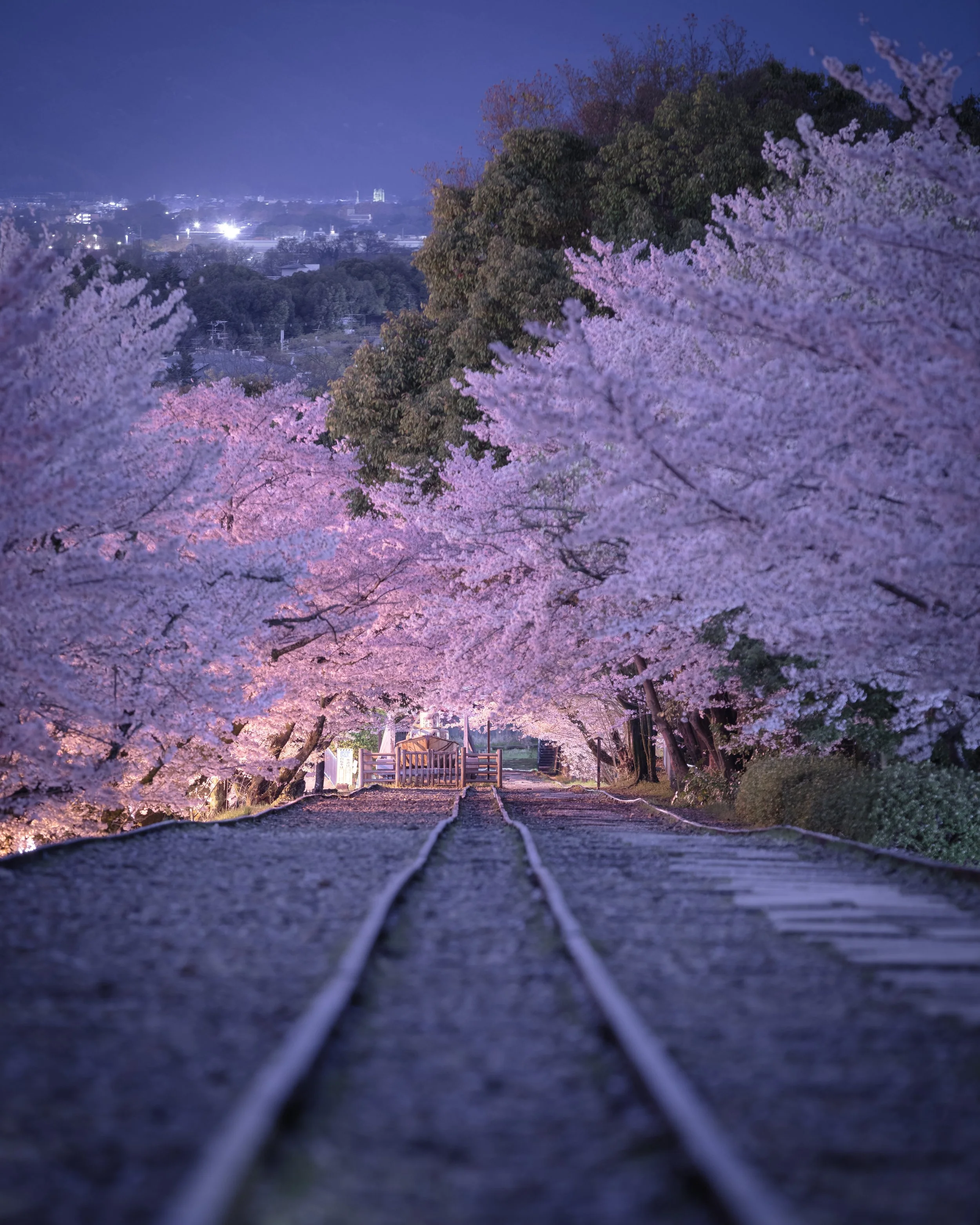
Keage Incline in the dusk
Every spring, Japan seems to pause for a brief and luminous moment. Cherry blossoms—sakura—bloom across the country, transforming landscapes into soft clouds of pink and white. Yet sakura are far more than seasonal decoration. For centuries, they have carried deep cultural and philosophical meaning.
In Japanese sensibility, cherry blossoms symbolize impermanence. Their beauty is intense but fleeting, lasting only a short time before petals fall like quiet rain. This transience reflects an aesthetic awareness often described as mono no aware—the recognition that beauty exists precisely because it does not last. Generations have gathered beneath the blossoms not only to celebrate spring, but to reflect on time, change, and renewal.
During the day, blossom viewing—hanami—is lively and communal. But after sunset, the atmosphere transforms. Yozakura, evening cherry blossom viewing, reveals a quieter dimension of spring.
Illuminated blossoms appear suspended in darkness, glowing against the night sky. Without the brightness of the sun, branches feel more sculptural, petals more luminous. Lantern light and subtle spotlights create depth and shadow, turning familiar landscapes into almost theatrical scenes. Conversations soften. The cool air sharpens the senses.
Yozakura invites contemplation rather than celebration. Reflections shimmer on water, temple roofs form silhouettes, and drifting petals seem to slow time itself. If daytime hanami expresses joy and togetherness, evening blossom viewing leans toward reflection and subtle beauty.
Beneath glowing petals in a Kyoto night, spring feels both vivid and quietly profound.
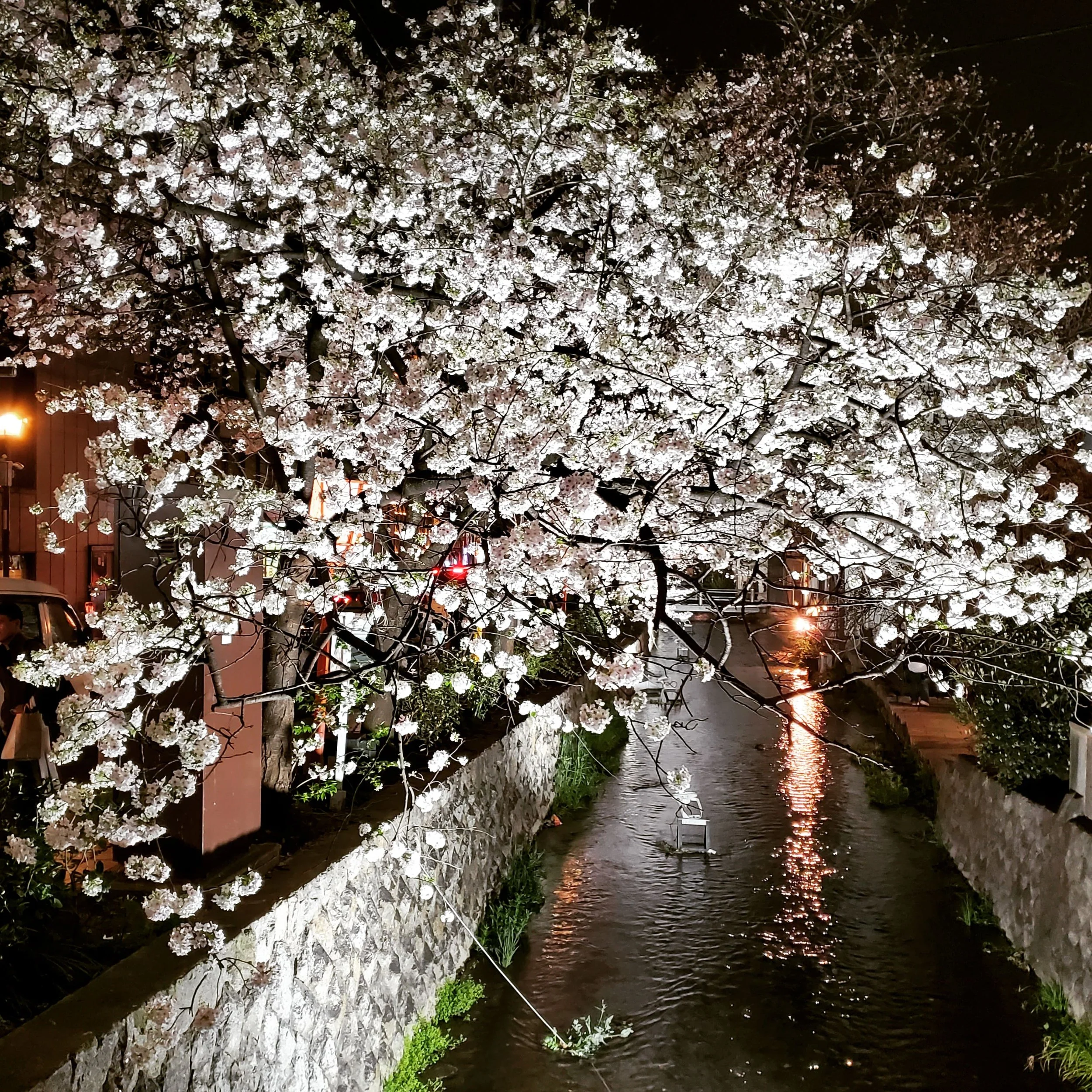
Yozakura Spots in Kyoto
l Maruyama Park: Home to Kyoto’s famous weeping cherry tree, illuminated each spring. Though centrally located, the atmosphere becomes softer later in the evening as visitors thin out.
l Kiyomizu Temple: During limited spring illuminations, the temple’s wooden stage overlooks glowing cherry trees below (until April 5; 18:00-21:00; JPY 500). Arriving closer to closing time offers a calmer experience.
l Kyoto Botanical Garden: Spacious grounds allow for relaxed evening viewing during seasonal illuminations (April 1-5; 17:30-21:00; JPY 500). With a wide variety of cherry species, the atmosphere feels more local and unhurried.
l Kamogawa River: While not formally illuminated everywhere, certain stretches of the river offer peaceful twilight walks beneath softly lit blossoms, especially north of Demachiyanagi.
l Hirano Shrine: A historic shrine known among locals for its diverse cherry varieties. Evening visits here tend to feel intimate, with lantern light enhancing the traditional setting.
l Nijo Castle: The castle grounds are beautifully illuminated in spring, with cherry trees framing historic walls and gardens. The contrast between stone fortifications and glowing blossoms creates a striking nightscape (Until April 19; 18:00-22:00; JPY 1,300).
l To-ji Temple: The five-story pagoda rising behind illuminated cherry trees forms one of Kyoto’s most iconic night views, especially during special spring openings (until April 12; 18:00-21:30; JPY 1,000).