

Where Time Softens
A Quiet Pilgrimage into Kyoto’s Green Silence
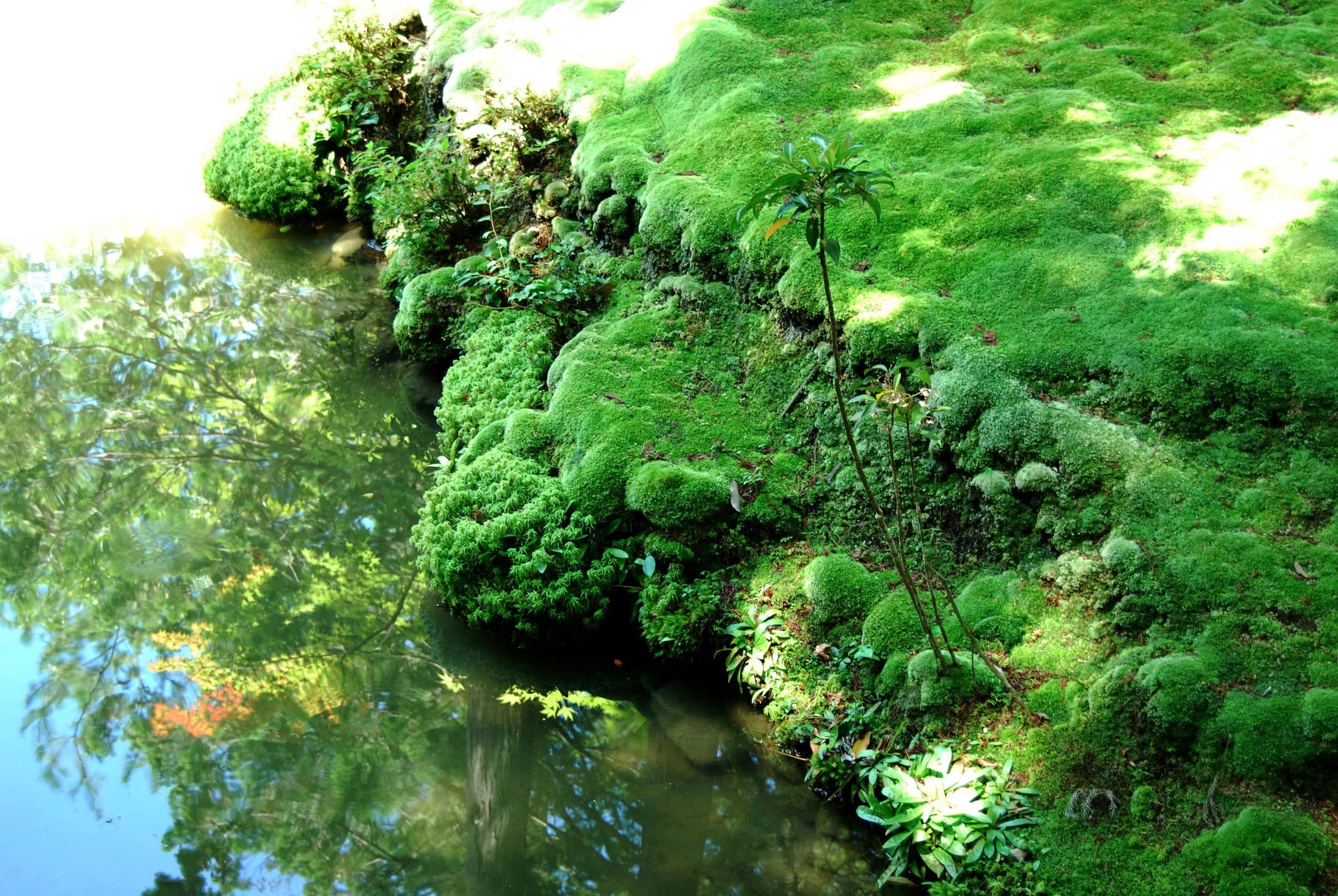
Tucked into a quiet valley in Kyoto’s western hills, Saiho-ji Temple offers a kind of stillness that feels increasingly rare. Known as “Kokedera,” the Moss Temple, it is a place where time softens, sound dissolves, and the mind—almost without effort—begins to settle. June, with its gentle rains and deepening greens, is perhaps the most eloquent season to experience it.
Saiho-ji’s origins reach back to 731,
when it was founded as a temple of the
Hosso school. Centuries later, in 1339, the
renowned Zen monk Muso Soseki reestablished
it as a Zen temple, shaping
not only its spiritual character but also its
landscape. At that time, the grounds were
far from the moss-covered vision we know
today. The garden was originally designed
as a refined pond garden of white sand
and pine, centered around a reflective
water feature and accompanied by elegant
structures, including a two-story pavilion
said to have inspired both Kinkaku-ji and
Ginkaku-ji Temples.
Muso Soseki’s design was innovative for its time. He worked with the natural contours of the land, integrating pond, islands, and dry landscape elements into a unified composition that would influence generations of Japanese garden design. The site was once vibrant—arched bridges stretching across the pond, fish gliding beneath the surface, and visitors drifting between small islands by boat. Its beauty was so admired that illustrations of the garden circulated even beyond Japan.
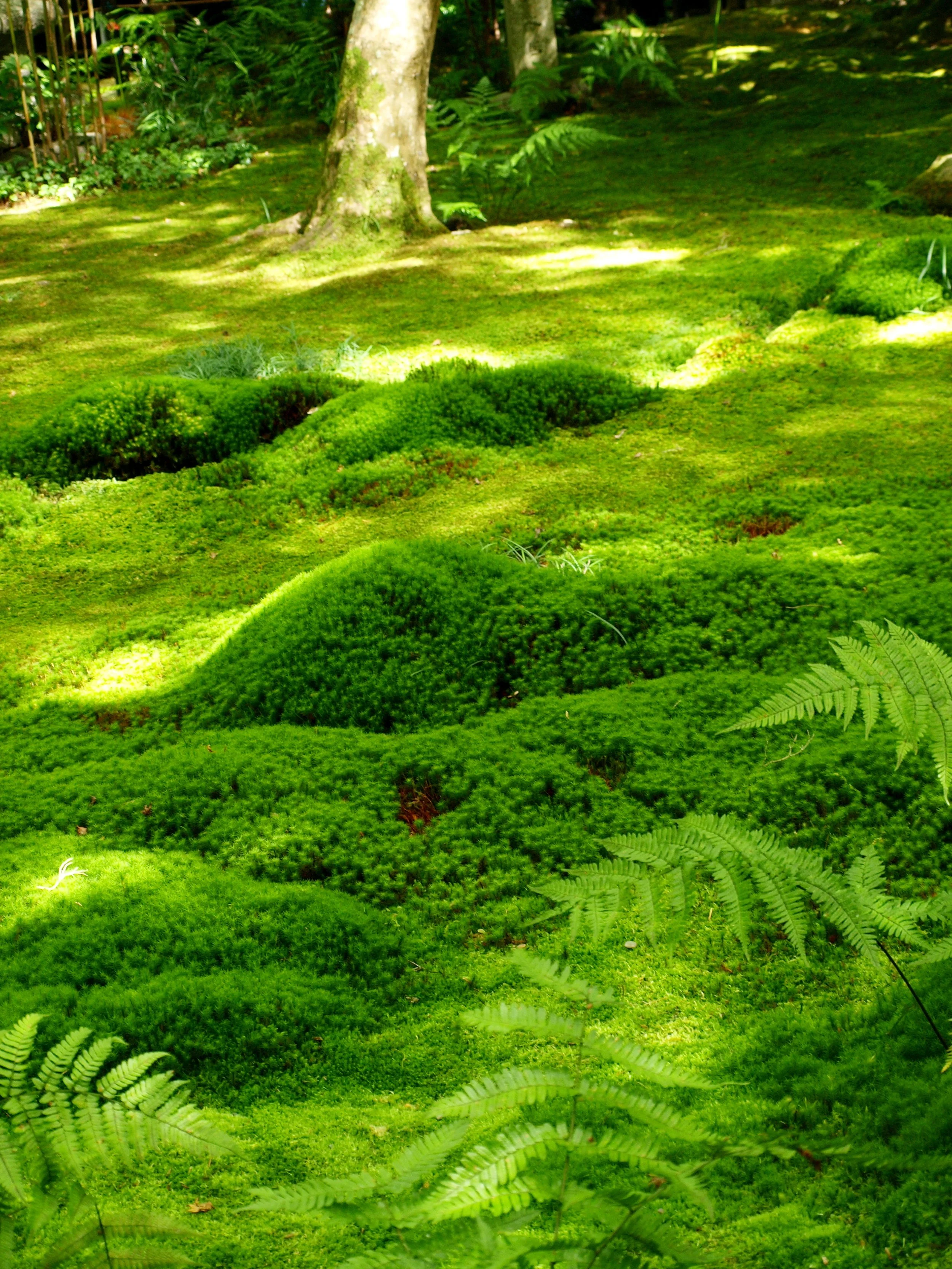
Yet history reshaped Saiho-ji Temple in ways no designer could have planned. The Onin War in the 15th century reduced many of its buildings to ashes, and repeated floods in the following centuries brought further destruction. It was through these cycles of loss and renewal that the garden gradually transformed. Nutrient-rich soil carried by floodwaters created the perfect conditions for moss to take root. Over time, it spread quietly, covering the carefully laid ground forms created by Muso Soseki.
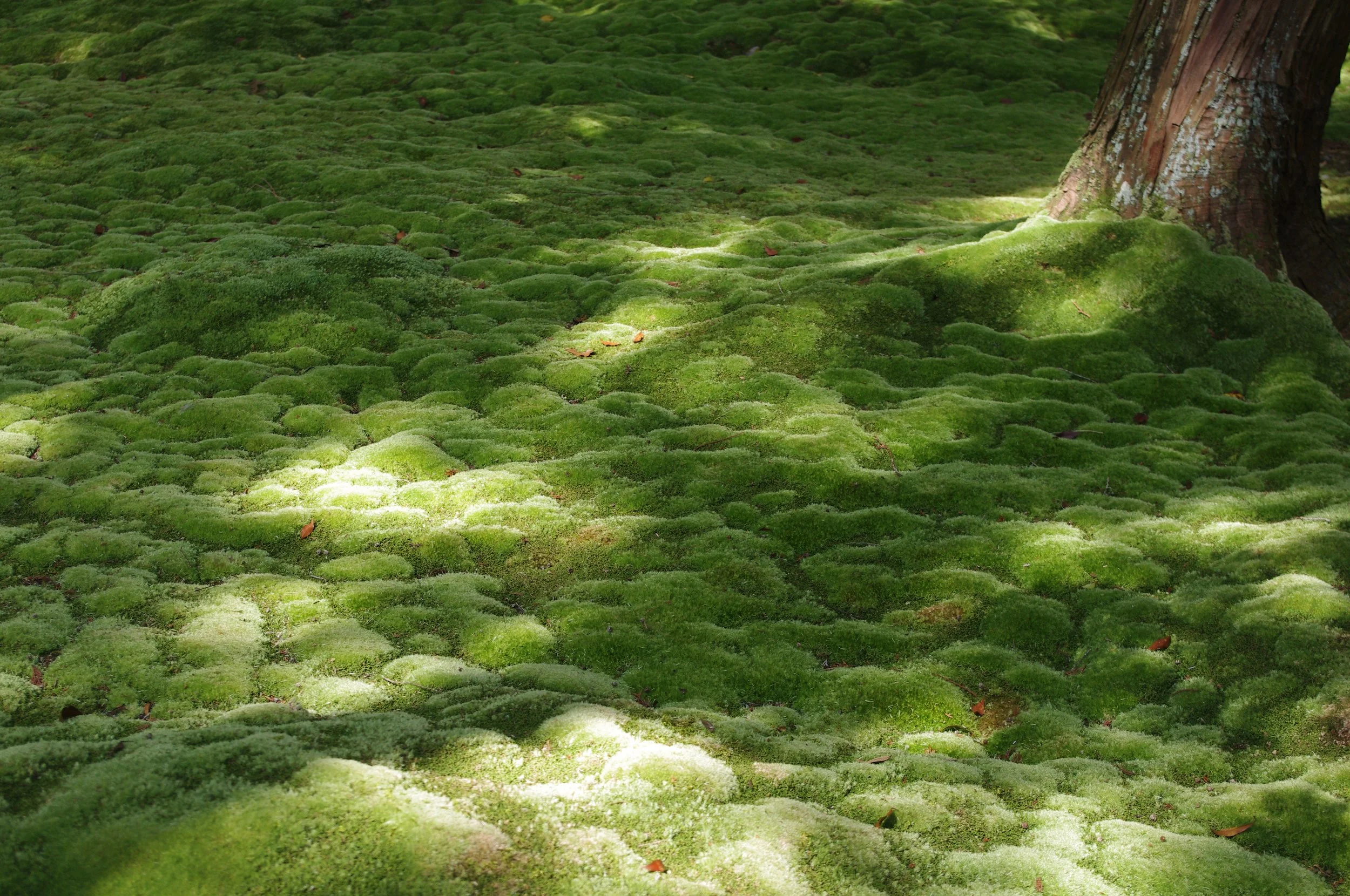
Today, more than 120 varieties of moss blanket the temple grounds, softening every edge and contour. What was once a garden of white sand has become an immersive landscape of green—subtle, layered, and ever-changing. In June, as the rainy season deepens, the moss reaches its most luminous state. Each rainfall seems to awaken it further, intensifying its color and texture. The garden does not present a single, fixed view; rather, it unfolds as a living surface, responding to light, moisture, and time.
Walking through Saiho-ji is not simply sightseeing—it is an experience of presence. The temple has long limited access, and since 1977, visitors have been admitted only in small numbers by advance reservation. This decision, made to protect the fragile moss and preserve the temple’s spiritual integrity, has shaped the nature of
the visit itself.
Upon arrival, guests are first guided into the main hall, where they participate in a brief sutra-copying practice. This ritual, known as shakyo, invites visitors to sit, breathe, and focus—copying the simple lines of a Buddhist text by hand. It takes only about fifteen minutes, yet it gently shifts the mind inward. Before encountering the garden, one is asked to arrive—not just physically, but mentally.
Only then does the garden reveal itself. There is no need to rush. Paths wind quietly through the grounds, circling the pond and leading into areas where the moss grows thick and deep, absorbing sound. Footsteps soften. Conversations fade. Even the act of looking changes—attention becomes slower, more attentive to detail: the curve of a moss-covered stone, the shimmer of water beneath a leaf, the faint scent of damp earth.
In early summer, lotus flowers begin to appear in the pond before the main hall. Known as Oga lotus—revived from ancient seeds—they bloom in a delicate pale pink, their presence almost otherworldly. They seem to echo the deeper theme of Saihoji itself: continuity across time, the quiet persistence of life, and the beauty that emerges through transformation.
Saiho-ji is not a place that asks to be understood intellectually. It asks something simpler, and perhaps more difficult—to be experienced as it is. To walk slowly. To notice. To allow the mind to become as soft and receptive as the moss underfoot. For those seeking not just beauty, but a moment of stillness within it, Saiho-ji offers something profound.
Visits to Saiho-ji are by advance reservation only and must be arranged through the temple’s official website. Entry includes participation in a short sutra-copying experience before access to the garden. Due to limited capacity, early booking is highly recommended—especially during the June rainy season, when the moss is at its most vibrant. https://saihoji-kokedera.com/