

Welcoming the New Year, Kyoto Style
Discover how Kyoto’s timeless traditions mark the passage from one year to the next
As the final days of December draw near, Kyoto’s rhythm changes. The city, once filled with autumn’s brilliant colors, grows still under a crisp winter sky. Steam rises from the Kamo River, and the soft scent of pine and mochi drifts through narrow streets. For Kyotoites, this quiet transition marks one of the most cherished times of year — Oshogatsu, the New Year season, when old and new meet in harmony.
When the Bells Ring
On December 31, Kyoto’s temples come alive for Joya-no-Kane, the ringing of the New Year’s Eve bell. At midnight, each temple bell is struck 108 times — the number of earthly desires said to cause human suffering. The sound rolls through the winter air, resonating softly between mountain foothills and rooftops. At Chion-in Temple, a dozen monks pull a massive wooden beam to sound the great bronze bell, its deep tone echoing far into the night. Each toll seems to sweep away a layer of the old year.
Okera-bi: Kyoto’s Sacred Fire
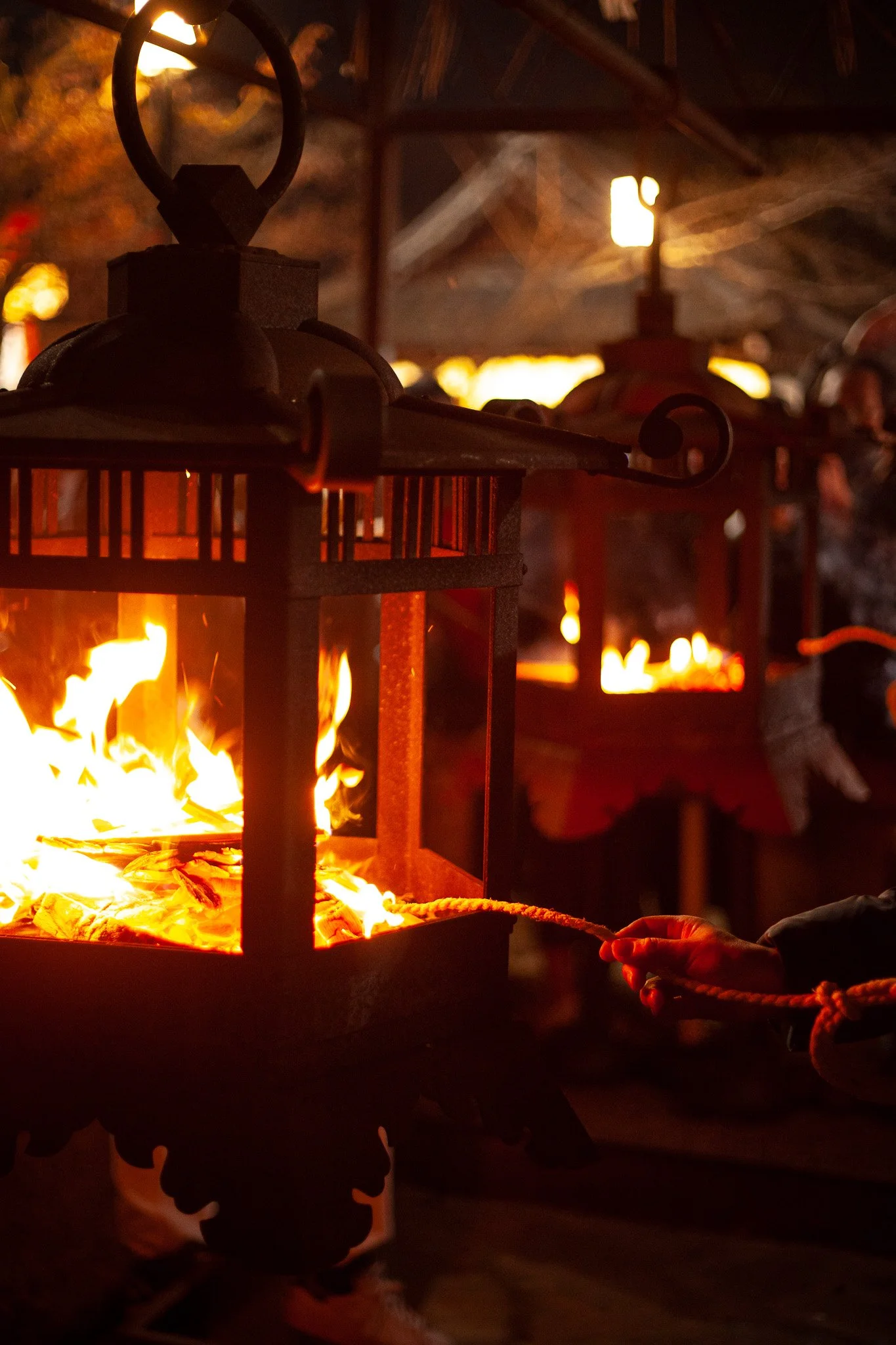
Among Kyoto’s uniquely local traditions is Okera-bi, held at Yasaka Shrine on New Year turns. The ritual fire is kindled from sacred roots of the okera herb, believed to purify and protect. As midnight approaches, the flames dance brightly in the shrine’s courtyard; their smoke said to ward off evil and bring health for the coming year.
Visitors can purchase thin ropes, ignite them from the sacred fire, and carry the flame home to reignite their household hearths — a symbol of bringing Kyoto’s blessing into one’s own life. The sight of the glowing embers carried through the dark streets of Gion is quietly unforgettable.
Dawn of a New Beginning
When dawn arrives, Kyoto welcomes Hatsuhinode — the first sunrise of the year. From Kiyomizu Temple’s terrace or the slopes of Fushimi Inari Taisha, people gather to watch the sky shift from indigo to gold. Wrapped in scarves and gloves, they sip hot amazake as the first light touches the city below. In that moment, Kyoto feels timeless — a place where devotion and daily life quietly overlap.
Prayers and Good Fortune
The first three days of January, Hatsumode, mark the year’s first shrine visit. Locals and travelers alike line up at Yasaka Shrine, Heian Jingu Shrine, and Kitano Tenmangu Shrine to pray for health, happiness, and success. The air buzzes with the flutter of kimono sleeves swish, charcoal crackles under pots of sweet sake, and paper fortunes (omikuji) flutter from branches. Each talisman and charm carries a hope for the year ahead.
In 2026, Japan will welcome the Year of the Horse in the Chinese zodiac — a sign associated with vitality, independence, and forward momentum. The horse is admired for its energy and ability to move toward new horizons, making this a year to act boldly and trust one’s instincts. For many Kyotoites, that zodiac connection adds a sense of optimism to the celebrations: an intention to start the year with confidence and an open heart.
Flavors of the New Year
Food, too, carries deep symbolism. On the evening of December 31, families slurp Toshikoshi soba — “year-crossing” noodles — to ensure a smooth passage into the new year and savor the length ahead. Then, from January 1, Osechi Ryori is enjoyed in lacquered boxes: beautifully arranged dishes, each rich in meaning. Black soybeans for health, sweet rolled omelet for wisdom, lotus root for clarity, prawns for long life. In Kyoto, where tradition thrives, these flavors become blessings you can taste.