

A Festival of Horses and Warrior Spirit - Fujinomori Shrine's Annual Fjinomori Festival
© Jeremy Hoare
In southern Kyoto, just a short distance from Fushimi’s historic sake district, stands Fujinomori Shrine, a place where the spirit of warriors, horses, and seasonal celebration come together. Each May, the shrine becomes the stage for one of Kyoto’s most dynamic traditional events—the Fujinomori Festival. In 2026, the celebration carries an added resonance, as it coincides with the Year of the Horse in the Chinese zodiac, a symbol long associated with this shrine.
A Shrine with Ancient Roots
Fujinomori Shrine traces its origins back more than 1,800 years. According to shrine tradition, it was founded in 203, during the reign of Emperor Ojin. The shrine enshrines several deities connected with victory, protection, and the well-being of warriors. Because of this association, Fujinomori Shrine became deeply connected with Japan’s samurai culture. During the Heian (794-1185) and Kamakura (1185-1333) periods, warriors prayed here before going into battle, asking for courage and safe return. Over time the shrine developed a reputation as a guardian of victory and martial skill, attracting visitors from across the country.
Even today, the grounds retain an atmosphere that reflects this legacy. The shrine preserves historical artifacts related a reputation as a guardian of victory and martial skill, attracting visitors from across the country. Even today, the grounds retain an atmosphere that reflects this legacy. The shrine preserves historical artifacts related to samurai warfare, including armor and weapons, and the annual festival continues to echo the martial traditions that once shaped Kyoto.
The Shrine of Horses
Fujinomori Shrine is widely known as Kyoto’s shrine of horses. The connection comes from the shrine’s ancient role in prayers for success in battle. In pre-modern Japan, horses were essential for warfare, transportation, and communication. Warriors therefore prayed not only for victory but also for the safety and strength of their horses.
Over time, this association grew stronger. Visitors began dedicating ema—small wooden prayer plaques—depicting horses at the shrine. These plaques remain a familiar sight today, hanging in rows beneath the shrine’s eaves.
The shrine is also believed to bring good fortune related to horses and horserelated activities. In modern times, this has expanded to include success in horse racing, drawing many visitors from the nearby Kyoto Racecourse in Fushimi. It is common to see ema decorated with powerful galloping horses, each carrying the hopes of its writer.
In the traditional zodiac cycle used across East Asia, the Horse symbolizes energy, determination, and forward movement. People born in Horse years are often described as spirited, independent, and full of vitality.
For this reason, 2026—celebrated as the Year of the Horse—offers a particularly meaningful time to visit. Standing beneath the shrine’s ancient trees, surrounded by ema depicting galloping horses, visitors can feel how centuries of tradition continue to shape the present.
Fujinomori Festival (May 1-5)
The Fujinomori Festival is one of the city’s most energetic traditional celebrations. The festival dates back to the Heian period, when rituals were performed here to pray for the peace of the imperial court and the stability of the nation.
May 3: Preparing the Sacred Procession
The grand festival begins on May 3 with a solemn ritual known as Mikoshi Mitamautsushi, in which the sacred spirit of the shrine’s deity is ceremonially transferred from the main hall into four portable shrines, or mikoshi. Before and after this ritual, visitors can hear powerful performances of Fujinomori Taiko, traditional drums played in dedication to the shrine. The deep rhythms echo across the shrine grounds, signaling the beginning of the celebrations.
May 5: Processions and the Thrilling Kakeuma Ritual
The highlight of the festival takes place on May 5, when the shrine grounds and surrounding streets fill with activity. In the morning, the Shinko Festival procession sets out as portable shrines, ceremonial participants, and marching musicians parade through the parish districts.
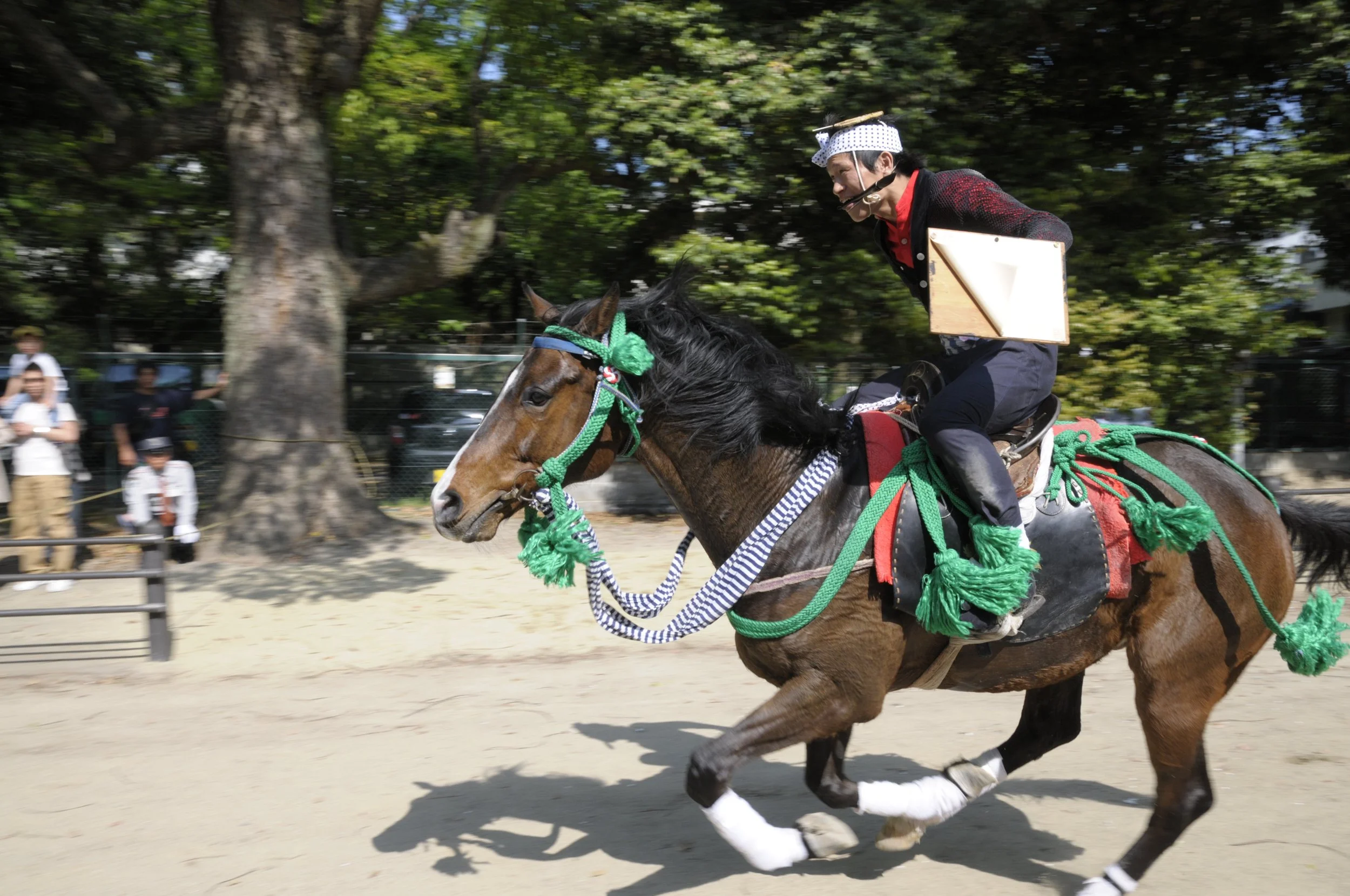
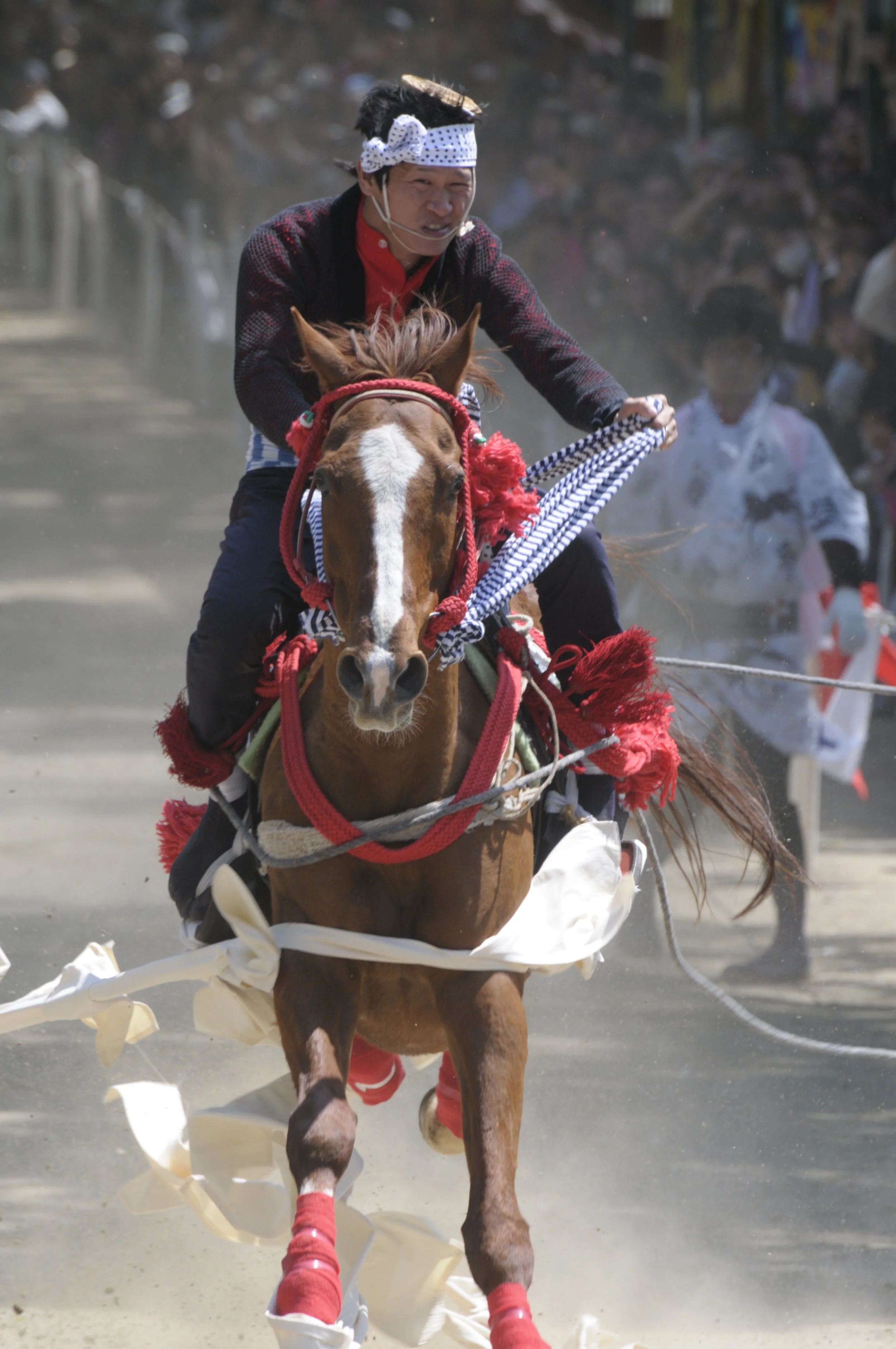
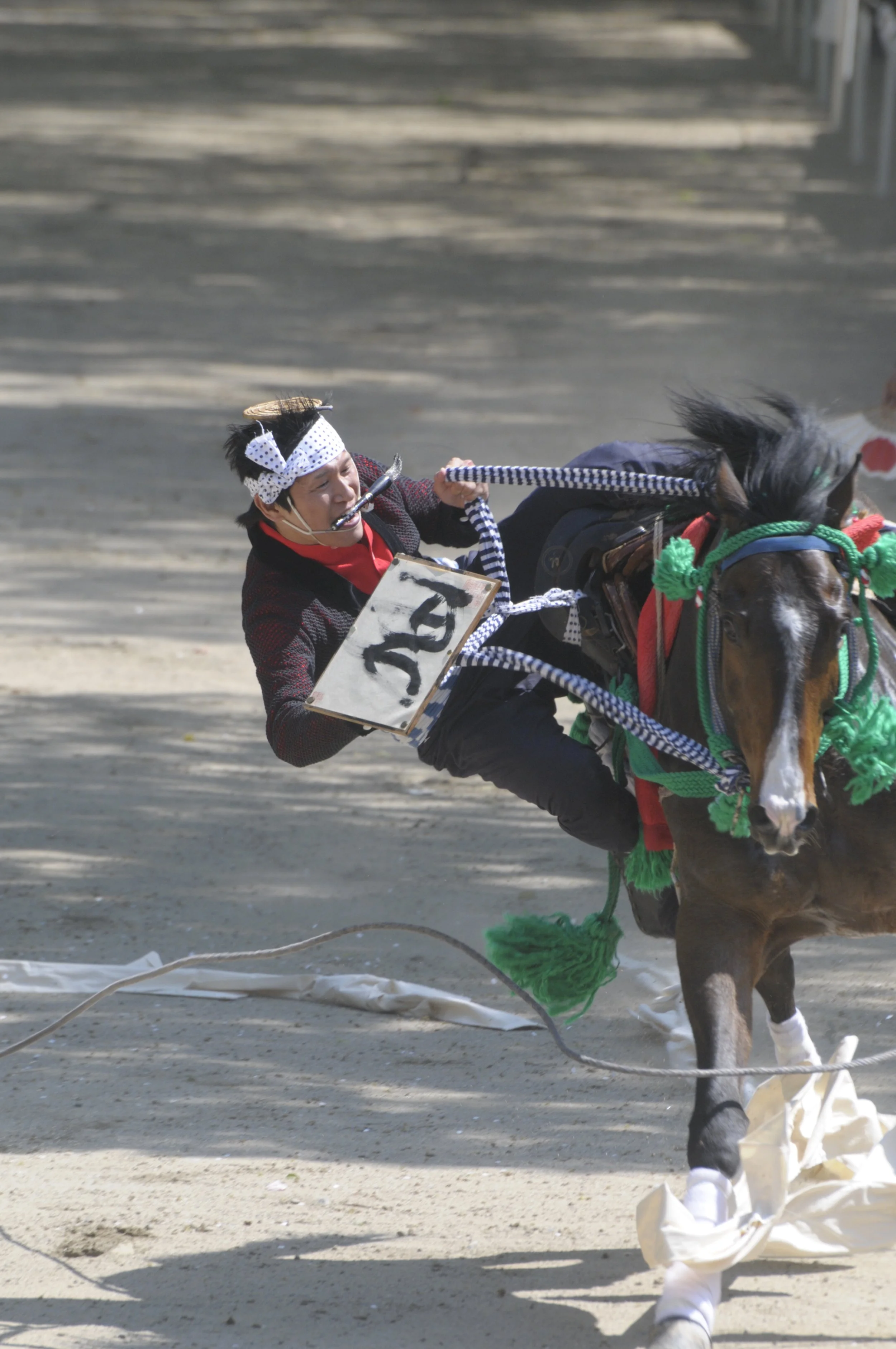
A charming feature of the procession is the children’s fife and drum band, whose young members wear uniforms inspired by historical restoration-era soldiers as they accompany the parade with lively music. In the afternoon, attention turns to the festival’s most spectacular event: the Kakeuma Shinji, a rare horseback ritual performed at 13:00 and 15:00 along the shrine’s riding ground. Skilled riders guide galloping horses while performing daring techniques such as hanging beneath the reins, writing characters in the air with their whips, and other acrobatic feats.
This dramatic display of horsemanship reflects the shrine’s deep connection with warriors and horses, and it remains one of Kyoto’s most thrilling traditional performances. For visitors, the Fujinomori
Festival offers a vivid glimpse into the living traditions of Kyoto—where history, ritual, and the powerful spirit of the horse still run side by side.
Access to Fujinomori Shrine
• From Kyoto Station
JR Nara Line → Get off at JR Fujinomori Sta. (about 10 minutes), and the shrine is about 5 minutes on foot from the station.
• From Central Kyoto (Gion / Kawaramachi Area)
Take the Keihan Main Line from Gion-Shijo or Sanjo Station. Get off at Sumizome Sta. (about 15 minutes). Walk about 7 minut. to the shrine.